Showing posts with label Behavior Change. Show all posts

Feb 4, 2013

Healthy Ideas for Valentine's Day

Valentine's Day is around the corner, and you know what that means: candy, chocolate, more candy, flowers, more chocolate, etc. With all those treats on sale, making healthy choices can be difficult, right?


For me, Valentine's Day is a nice way to set aside some time for my husband and I. Now that we have a bigger family, spending quality time together is even more important. So here are some healthy ways to show that special someone you care.
  1. If you're going with chocolate, buy dark chocolate (at least 70% cocoa). It has phytochemicals and when eaten in moderation, may help prevent heart disease. Hint: make sure cocoa is the first on the ingredient list.
  2.  Go for a walk with your love.
  3. Make a healthy meal together and enjoy by candlelight.
  4. If you do go out to eat, share an entree. It will cut costs and control portions!
  5. Celebrate Valentines Day with your kids with healthy treats like mini-boxes of raisins or pretzels, pencils or stickers.
  6. Be creative: make a Valentines Day craft! Here are some cute ideas from Martha Stewart.
  7. Fore more fun tips, visit the American Heart Association.

What are you doing to celebrate Valentine's Day this year?

Sep 20, 2012

A Healthy Perspective on Weight Loss


Maybe it's just me, but it seems like everywhere I look in health-related magazines and books, weight loss is the theme. Since recently having my second son, losing weight has definitely been on my mind; how much to lose, when to start, what plan to follow, etc? 

Unfortunately, much of the popular press is no help. There seems to be no consistency in what nutrition plan or "diet" works for the long term. Between cleanses, fasts, very low calorie diets, gluten-free, vegan, paleo, etc, it can be very confusing. Naturally, this hodgepodge of diet advice is usually accompanied by images of underweight models and other body types that aren't realistic - or healthy - for most people. Frustrating, right?

Is this what every woman's supposed to look like?? 
I don't think so.


The reality is that we all come in different shapes and sizes and health cannot be defined exclusively by numbers on a scale. Striving for a "perfect" weight can not only lead to disordered eating, but it can take the focus away from the real purpose of being healthy - to enjoy your life!

According to an article from the Academy of Nutrition and Dietetics, there is no "ideal body weight". Living a healthy life can be achieved by following a few simple principles:
  1. Eat a healthy, balanced diet
  2. Get regular physical activity
  3. Look at your health habits and find ways to change those that are unhealthy
  4. Make time for regular physical check-ups
  5. Have your blood pressure, cholesterol, blood sugar and triglycerides checked regularly
Interestingly, following these principles often leads to achieving and maintaining a healthy weight, that is, a weight that allows you to enjoy life and be active. I keep all this in mind as I embark on post-baby weight loss round two! My goal is not to get wrapped up in the numbers-game, but to eat well, exercise regularly and enjoy my life. Here I go...

Aug 1, 2012

Do You Have a Healthy Relationship with Food?

The relationship between the brain and the body is pretty interesting, especially when it comes to food. Have you ever found yourself wanting to eat something unhealthy and doing everything within your power to overcome temptation? I can certainly relate. For some reason, I thought it was a good idea to make cinnamon rolls last week. (Editors note: I'm 40 weeks pregnant and therefore cannot be held responsible for my decision making). So I made them, ate one, gave half of them away to friends and put the rest in the freezer. Thus far, it has taken every last shred of self-control not to break into my stash. Sound familiar?

So what's your solution to temptation? Pantry purge? Get rid of all "unhealthy" foods in the house? Give in and eat what you want or have a small bite, then walk away? Your reaction not only reveals what you would do, but also how you relate to food, which is just as important as what we ultimately put into our mouths.

Working in nutrition, I've seen a lot of disordered eating. These are not just clients with anorexia or bulimia, but oftentimes people I meet day to day. Between the media, unhealthy body images, the latest diet trend, social pressures and more, it can be very difficult to maintain a healthy perspective on what we eat. From what I've observed and studied, I've come to believe it's not just about telling people what to eat, but helping them think about food in a new, healthy way. In order to change how you think, it's important to know the difference between healthy and unhealthy thoughts and behaviors when it comes to food. 

Here's the Tiffany the Dietitian version of some of the "signs" of a healthy vs. unhealthy relationship with food. Ask yourself which way you feel most of the time.


This list could go on. What are some healthy vs. unhealthy perspectives you've observed?
  

Jun 20, 2012

"Bread is the Enemy" and Other Tall Tales

The more people I talk to about diet and nutrition, the more I'm convinced we have a serious case of bread-phobia in America. You've probably heard it too. How many people have you heard say they're "staying away from bread" in an effort to lose weight? Yeah.


At this point in the conversation, I usually explain the fact that weight is based on the principle of calories in, calories out, blah, blah, blah. This is never a popular answer. Why? Because it means that weight loss isn't easy; it means you have to eat less, move more, and develop new habits that form your lifestyle. It means you'll have to say no to seconds at dinner and eat sweets less often. It means you have to make a commitment to your health.....and stick with it.

It also means you'll have less risk of developing chronic disease, may live longer and have a higher quality of life, among many other things. I don't know about you, but that sounds worth it to me. Admittedly, changing lifelong habits is no easy task. And it seems that in an effort to avoid this, too many people simply resolve to avoid "bad" foods (common food-phobias include bread, bread products, meats, sugar, dairy, etc.) which can - and frequently do - result in nutrient deficiencies and other health problems.

Interestingly, amidst the bread and other food-related phobias, America has a record number of people with obesity, diabetes, high blood pressure and hyperlipidemia, all of which are lifestyle-related diseases. It seems as though avoiding bread just isn't working.

Articles on the internet like this one don't help much either. Here, a journalist postulates his theory that America is in an obesity epidemic due to grain products and sugar. His article, of course, completely ignores well-accepted and tested research that people are eating more than ever before. A lot more. According to the USDA, daily calorie consumption in America in 1970 totaled 2,170 calories whereas in the year 2000, daily calorie intake increased to 2,700. That's a 530 calorie/day increase, which leads to gradual weight gain overtime. Wait a minute, that's exactly what we've seen! In 1980, about 46% of US adults were overweight whereas 67% of adults were overweight in 2000. Now, about 1/3 of the US population is obese, according to the CDC. There is no doubt the trend toward overweight and obesity in the US continues to rise. The question is why. 

As I mentioned before, many people want to blame specific food groups: meat, sugar, bread, dairy, gluten, etc. I've heard them all. I admit, we do tend to eat a lot of breads and sweets. But labeling one or multiple foods as "bad" only perpetuates the problem of disordered eating and disordered thinking. Food is not the enemy; it's how we use it.

Some the major reasons we have weight-related problems in the US are related to the increased availability of food, more eating out, less cooking at home, sedentary lifestyles, and more disposable income. In summary, for various reasons, we eat more today than we did 50 years ago. 

The even more complicated question is how to resolve this problem. The answer involves understanding not only biochemistry, but psychology as well. Working with a healthcare provider - such as a registered dietitian - who provides not only education but continued support and accountability is what I've observed to be the most effective strategy for achieving and maintaining a healthy weight. I not only believe this, I've seen it work. Every. Time.

So next time someone tries to tell you that bread is the enemy, thank them for the advice and tell them that you're into eating a healthy, well-balanced diet. It'll rock their socks off.

Jun 5, 2012

Should You Go Paleo?

I'm a big fan of exercise. There's nothing quite like the feeling of a good workout. During a normal week, I try to do 4-5 days of cardio and 3 days of weight lifting. Recently, I wanted to give cross-fit a try since the program incorporates both cardio and resistance training. 

After a session, I decided I really liked the workout. I was a little surprised however when I saw the diet the cross-fit gym advocated: The Paleo Diet. Posted on the walls were things like "you're probably allergic to grain" and "avoid dairy". Also written in bold letters were foods that "you should eat". These included primarily meat, poultry, fish, fruits and vegetables.

Image from: http://www.marksdailyapple.com/how-to-succeed-with-the-primal-blueprint/#axzz1wz8D8wju
To me, the Paleo Diet sounds a lot like a revised version of the Atkin's diet (and we all know how that tune goes); emphasis on protein, fruits, vegetables and a view that carbs are the enemy. As I understand on the Paleo Diet, complex carbs like pasta and rice are allowed in moderation for athletes, especially during recovery. But in general, it is a high-protein, high-fat, low-carb diet that promises weight loss and the potential resolution of health problems like heart disease and diabetes.

Apart from the tendency to disordered eating I've witnessed many people experience when trying to eat "low-carb", here's the big problem with the Paleo Diet: it identifies the right problem (obesity in America) with the wrong solution (low-carb dieting). Carbohydrates are the primary source of fuel for our bodies, especially during periods of intense activity (like....say, a cross-fit workout). That said, there is no question America is in the midst of an obesity epidemic. The solution to the problem is simple in theory: eating healthy foods in smaller portions and moving more. The application of this solution is the challenge and involves much more than simple calories in, calories out dogma. Truly becoming healthy involves a commitment from both your mind and your body, and that is no easy task.

Still, it's important for those seeking weight loss or general health to remember that the latest fad diet is usually not the solution to lasting change. A few other problems with the Paleo Diet are the nutrient deficiencies that can occur overtime when restricting dairy and grain products (for example, Calcium, Vitamin D, B Vitamins, fiber and more). For those with health problems like diabetes, the Paleo Diet can increase risk of blood sugar abnormalities due to the lack of carbohydrates. 

So, did I become a cross-fitter? No, but not because I was offended by the diet. I actually really enjoyed the workout, but the price tag just doesn't fit the budget right now. Instead, I do similar workouts at home and stick to a truly well-balanced, healthy diet. 

It looks a little something like this.


What are your thoughts on the Paleo Diet? Have you tried it?

Mar 4, 2012

Getting Our Plates In Shape

I bet you didn't know that March is National Nutrition Month. Pretty fancy, right? I probably shouldn't say this, but up until this year I really didn't pay too much attention to it. It's not that I'm not into nutrition....clearly. I just don't work in public health or a nutrition job that lends itself to talking to people about National Nutrition Month.

But this year is different. This year I have a blog. And talking is what we do best here :)

For National Nutrition Month, the Academy of Nutrition and Dietetics asked dietitian bloggers to write about how we "get our plates in shape". You may recall the new plate image from the USDA that replaced the old food pyramid....


I think this image is very helpful and practical. Although it doesn't help explain how much to eat, it does nicely depict what to eat.

So, what does "get your plate in shape" mean to me? It means a lot of things, but for the sake of not putting you to sleep (wake up!), I'll focus on a few of my favorite points:

To me, "getting your plates in shape" means:
  • Think Before You Eat. Take a look at what's on your plate. Is it healthy? Is it balanced?
  • Eat Nutrient-Dense Foods. Aim to eat foods that offer the best nutritional "bang for your buck" such as fruits, veggies, whole grains, lean proteins, low-fat dairy and heart healthy fats.
  • Embrace Change. Real change starts in your mind. Once you change your mindset, your habits and lifestyle will follow.
A few additional tips from the American Academy of Nutrition and Dietetics are:
  1. Make half your plate fruits and veggies
  2. Make at least half your grains whole
  3. Drink fat-free or low-fat milk
  4. Eat a variety of protein sources
  5. Make foods high in salt, added sugar and fats occasional choices, not everyday
  6. Enjoy your food but eat less
I meet a lot of people trying to lose weight. Many of these people exercise regularly and are therefore confused why they're not losing weight. If this sounds like familiar, you may want to consider "getting your plate in shape" because - seriously - you can't out-exercise a bad diet. True story. A "bad diet" could mean you're not eating healthy foods or you're simply eating too much. Whatever the case, following the tips mentioned above can help you reach your health goals.


How can you get your plate in shape this week?? 

Feb 10, 2012

A Happy (and Healthy?) Valentines

I love holidays. I know, I know....it's Valentine's Day. I'm not completely sold on it being a totally legit holiday. But regardless, for me it's the perfect excuse to spend time with family and loved ones. Oh yeah, and eat some good food!

I'm not going to lie. I've been known to eat cookies and cupcakes on such holidays. And I'll be honest about something else too. I totally went to Starbucks this morning specifically for their cute Valentine's Day cups.....


I am happy to say there is no reason to fear indulgent food as long as you know how to enjoy it. Here are a few tips:
  • Think positive. Try to focus on foods that you can eat, rather than those you can't. Filling your plate with nutrient-dense foods like lean meats, whole grains, fruits and vegetables doesn't have to be a chore. Find some yummy recipes that incorporate these ingredients. Check out my Pinterest page for ideas.
  • Be mindful of portions. Enjoy the food you eat, but remember to pay attention to the signals your body sends when you're full. To stay in tune to these cues, eat slowly and enjoy every bite. That's not so hard, right? This way, you're more likely to stop when your full or go back for seconds only if you're actually hungry.
For our Valentines Day celebration, I usually make a nice meal at home for my husband and I after the little one is in bed. This year, I plan to do the same and am excited to try some super-yummy looking recipes. Here's the menu:

Skirt Steak with Lemon and Chili-Roasted Potatoes


Roasted Brussels Sprouts with Bacon (I plan on using turkey bacon instead of regular bacon)


For dessert, Chocolate Covered Strawberries


What's on your Valentine's Day menu?

Jan 5, 2012

Change your life and the body will follow

It's January and I guess that means it's time to get back in the gym.

I took a spin class this morning at a gym I'm considering joining and MAN - did it kick my butt! Every 15 minutes felt like 30. Over our holiday vacation in So Cal, I visited a local gym to take a little "me time" and workout. On the wall prominently displayed was this poster:

"Change your body, change your life"


To me, this sign sends the message that once you get that sexy body you've always wanted, your life will be better....maybe even sexy? Does the body really come first, then the great life? Or do you change your life, then see your body change? Hmmmm.....I'll go with option B.

This advertisement - like so many today - focuses on body image. Maybe it's just me, but I'm tired of the media directing so much emphasis on body image. Most of the time, the "ideal image" portrayed is far from healthy and it sends an unrealistic message to both women and men. The truth is that people come in all shapes and sizes: pear shape, apple shape, square shape, whatever. It's important to remember that regardless of whether your shape conforms to the model on the cover of a magazine, you can certainly still be healthy.

If I could re-write this poster, it would say: "Change your life and the body will follow". That may not sell gym memberships as well, but it certainly is more truthful about the real way to achieving lasting change.

Making healthier eating choices, exercising regularly, taking time to de-stress and getting plenty of rest are a few of the major components of a healthy lifestyle. Once these have been adopted, your body will change. Guaranteed.

So be kind to yourself my friends and remember that health comes in all shapes and sizes.

Dec 15, 2011

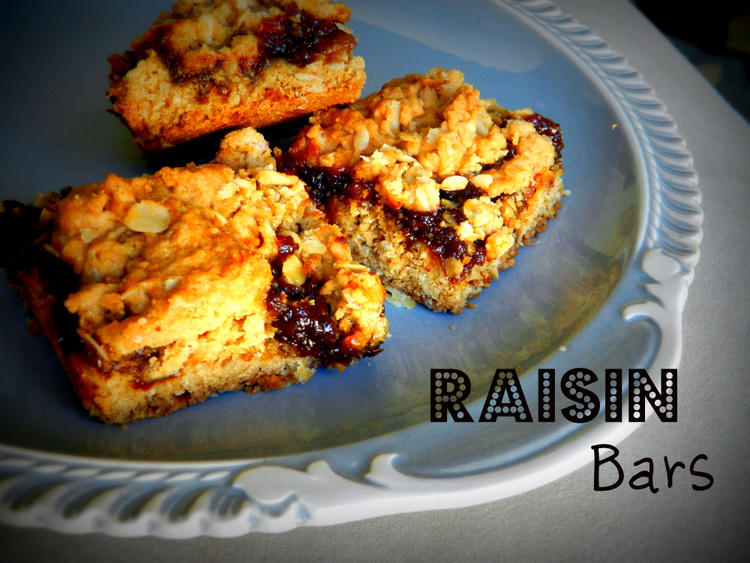
Raisin Bars

Before you start thinking I'm some crazy person who doesn't eat sweets, let me set the record straight. I absolutely love sweets, which is why I use a "game plan" to enjoy them!

Just as it's important not to eat a ton of treats, it's equally important to know how to enjoy them. Eating sweets in moderation is a skill worth developing. Personally, I try not to bake too often in general. It's just dangerous. So, I only bake about once every couple months. And when I do, I make a half batch, enjoy one or two treats for the next few days, and then I freeze the rest in small portions.

 
Currently in my freezer is a half-batch of raisin bars. I saved about 4 small bars for us to enjoy in the next few days, and the rest went straight into the freezer. This prevents them being too accessible, if you know what I mean. They turned out like a gourmet oatmeal-raisin cookie, which to me is just plain yum.

Recipe adapted from Raisin Bars

Ingredients:
  • 1 cup raisins
  • 1/2 cup sugar
  • 1/2 teaspoon cornstarch
  • 1/4 cup water
  • 2 1/4 cup all-purpose flour
  • 3/4 teaspoon baking soda
  • 3/4 teaspoon salt
  • 1/2 cup unsalted butter
  • 1/2 cup light brown sugar
  • 1 egg
  • 3/4 teaspoon vanilla extract
  • 1 cup old fashioned oats
Preparation:

Preheat oven to 350F. Using a canola oil cooking spray, lightly grease a 10x15 inch baking sheet. To make filling, mix cornstarch in 1/2 cup cold water and pour into medium saucepan. Add raisins, sugar and extra 1/2 cup water, mix and bring to a boil. Then, let simmer for about 10 minutes. Allow mixture to cool a bit and then place in food processor and pulse until texture is smooth and slightly thick. Let cool.

To make dough, mix flour, baking soda and salt. In a separate bowl (I used a mixer), combine butter, sugar, egg and vanilla extract. Then, add flour mixture and old fashioned oats to butter/sugar mixture and stir just until well combined.

Using half the dough, press it into the greased baking sheet. Then, spread raisin mixture over dough and finish by crumbling remaining dough on top. Bake about 35 minutes. Let cool and cut into small portions (I chose 1.5 x 1.5 in).

Dec 11, 2011

Motivation Monday: Your Holiday Eating Survival Guide

Is it just me, or are we being overrun by Christmas cookies? Holiday treats are literally everywhere. I go to Trader Joes, there they are. I go to Target, there they are. I go to work, oh look, there they are again! How is any one person supposed to navigate this nutritional minefield? One answer I learned this week during a conversation with some work friends. It went something like this:

Person A: "Would you like some salted caramel chocolates?"
Person B: "Mmmm, sure....but my gut has been growing from all these goodies lately"
Person A: "It's okay. Enjoy it now and you can lose weight after the holidays"
Person B: "Okay!" (proceeds to eat salted caramel chocolates)

Before you ask, I was neither person A nor B. I was person C, who was strategically silent during the conversation. In my opinion, the "eat now, lose it later" scenario is all too common. And I get it. "Celebrating the season" oftentimes is loosely translated to mean eating a lot! And with this motto, it's very difficult to maintain a healthy weight.

This sums up weight gain/weight loss basics:


Of course, the same is true vice versa. If you eat 500 calories more than you burn, you'll gain 1 lb per week. This is REALLY easy during the holidays because a few chocolates, cookies and candies here and there add up to 500 calories super quickly. Gaining weight does more than make your clothes too tight, it also can increase your risk for high blood pressure, high blood fats (hyperlipidemia), and other chronic diseases, especially if a person is overweight long-term. 

So how can we enjoy holiday treats without overdoing it? Here are some simple steps I follow that allow me to enjoy the foods I love without gaining weight.

Holiday Eating Survival Guide:
  1. Enjoy only those foods that you LOVE. 
    • Don't "waste calories" by grazing on unhealthy foods you don't even enjoy that much. Only eat treats that you really, reeeally love, and make sure the portion is small.
  2. Limit sweet treats in the house. 
    • Since there will be many temptations once you step outside the home (think: work, parties, friends houses, etc), limit treats lying around the house.
  3. Find non-food ways to celebrate the season.
    • Think of creative, festive, non-food ways of celebrating the holidays. Take a drive to see Christmas lights, do holiday crafts with your kids, or make Christmas cards to send to family. A little creativity goes a long way here.   
  4. Acknowledge what food is yours and what food is not.
    • Just because treats are offered doesn't mean you have to eat them. Politely say "that looks great, but no thanks" or something of that nature and you can help avoid holiday overeating. 
All in all folks, it's absolutely possible to enjoy treats without unwanted weight gain. Stay positive, make healthy choices most of the time and eat treats sensibly. Coming out of the holiday season knowing you were strong and smart enough not to overindulge will make you feel better than having a new set of love handles. True story.

Dec 4, 2011

Motivation Monday: Add Some Resistance

Calling all readers! It's time for a motivation pick-me-up. This week, we're talking exercise.

Life is just busy, right? Add one, two, three kids...oh yeah, now that's busy. So, I totally understand making time to workout is challenging in our crazy lives. But since current research suggests regular exercise promotes health and lowers risk of disease, it seems to me like it's crazier NOT to exercise.

There are two major types of exercise: aerobic (like jogging and swimming) and anaerobic (like weight lifting). I've noticed that many people I talk to stick with aerobic exercises like jogging, biking, swimming, dancing, etc and rarely (if at all) perform strength training exercises (especially us ladies). There's this crazy myth that weight lifting makes women bulky. SO not true. Sure, lifting weights will put on some muscle, but since we don't have as much Testosterone as men, we don't have to worry about bulking up.

This chick is lifting some serious weight and she doesn't look too bulky to me....

Image from http://soon2befit.tumblr.com/page/117
If you need more convincing, here's a quick peak at some of the major healthy benefits of strength training:
  • Improves bone density
  • Increases metabolism
  • Improves quality of life by allowing you to perform basic activities (like housework, laundry, gardening, etc) more easily.
  • Prevents loss of lean muscle mass overtime, which is common as we age. Oftentimes, the lost muscle is replaced with fat. To slow/prevent this process, add resistance training to your routine for about 30 minutes two to three times per week.
Thankfully, there's no need for a fancy gym membership or purchasing expensive equipment. Body weight workouts like push-ups, pull-ups, squats, lunges and sit-ups are excellent exercises to start with, especially if you don't regularly weight lift. I recently found this great website called MomWOD (stands for Mom workout of the day), which provides weekly templates for home workouts that are quick and actually quite challenging.

What works for me? Well, with a toddler at home working out is a team effort. My husband and I take turns working out every other evening from about 7:30-8:30pm. We typically weight train for 30 minutes and finish with 20-30 minutes of cardio.

This week, try to find what works for you and add some resistance training to your routine!

Nov 27, 2011

Motivation Monday + A Healthy Dessert

Hello friends! I hope you all had a wonderful Thanksgiving filled with good food and good company.

In last weeks Motivation Monday, I proposed a group challenge to make ONE healthy change for the week. So how did it go? Apart from Thanksgiving day, thanks to you and the accountability factor, I stuck to my goal! So, thank YOU.

Apparently, I'm not the only one with a sweet tooth. Like me, many of you chose to swap your evening sweet treat for a piece of fruit. I found that the first few days were a little tough but it got easier as the days went on.

It also got my creative juices flowing and helped me put together a dessert that I can honestly call "healthy". You know, one that tastes great but that you don't have to feel guilty enjoying. Enter: sugar-free hot cocoa. Not the store-bought version, but actually making it from scratch. HUGE taste difference! This recipe is all that you want in a dessert. It's warm, rich, chocolaty, sweet and oh so cozy. Plus, it won't make your pants feel in the least bit snug. Score!


So why is it "healthy"? I'm so glad you asked. First, low-fat or fat-free milk is a great source of protein and vitamins and minerals like calcium and vitamin D. Hello strong bones! Secondly, cocoa powder provides antioxidants, which helps protect cells against free radicals and cocoa may also lower blood pressure. Finally, sugar-free hot cocoa is very low in calories and has no refined sugar. Need any more convincing? I didn't think so. 


Artificial sweeteners such as Splenda, Equal or Sweet & Low are products that help cut calories, but should be used sparingly. There are no official recommended limits, but I personally try to limit my consumption to no more than 2 packets per day. 

....On to the recipe!

Ingredients:
  • 1 Tablespoon Cocoa Powder (I like Trader Joe's)
  • 5 oz Low-Fat or Fat-Free Milk
  • 1 Packet of Sugar-Free Sweetener (I like Splenda)
Instructions:

Mix cocoa powder, sugar-free sweetener and a tablespoon of milk in your favorite mug (very important) until powder is dissolved. Meanwhile, microwave remaining milk until hot. Mix heated milk with dissolved cocoa mixture, stir and enjoy.


Variations:

I love love love experimenting with hot cocoa. Here are some of my favorite ingredients to add once I've made the cocoa:
  • Peppermint Hot Cocoa: Add a drop of peppermint oil. Be careful that the drop is small because this is powerful stuff!
  • "Spicy" Hot Cocoa: Add a dash of cinnamon or pumpkin pie spice or (if you're brave) cayenne pepper
  • Vanilla Hot Cocoa: Add about 1/8 teaspoon vanilla extract

Nov 20, 2011

Group Challenge - Are You Ready?

Does your plate always look like this? Mine doesn't either.


Even with a Masters in Nutrition, I have to admit my diet isn't always perfect. There are weeks when I don't exercise enough. There are days when the donut shop calls my name. There are even moments when I just.need.a.cupcake! Even though I can name a million reasons why eating healthy and staying active are good for my health, why are there times when I let things slide?

It just goes to show that eating healthy isn't just about head knowledge. It's about putting that knowledge into practice everyday. And THAT is no easy task. Certainly, there are times when eating indulgent foods and getting less activity is okay. Taking a brief break can even be good for your health. Keyword: brief.

Let's be real - you know and I know that sometimes those "little" indulgences add up over the course of the day/week/month and become (gasp) our lifestyle. So let's make a healthy choice together. Better yet, let's make it a challenge - teamwork is just more fun.

Here's the plan: first, pick one thing you can do to improve your diet or lifestyle this week. One little thing. Doesn't have to be big, but it does have to challenge you. Next, post your goal for the week in the comments. Yes, post it! It's about accountability, my friends. The final step is to let me know how it went via a comment in next weeks Motivation Monday. This is a very important step, so don't skip it. Follow through - you can do it!

Make sure your goal is do-able. Something that challenges you but also something you can practically do. Here are a few examples:

This week I will ____________________
  1. Swap my evening sweet treat for a piece of fruit
  2. Eat veggies with lunch, dinner and a snack
  3. Make your grains 100% whole grain for at least 2 meals per day
  4. Drink at least 2 cups of low-fat or fat-free milk each day
  5. Increase your cardio by 10 minutes on 2 workout days
  6. Swap a take-out meal for a home-cooked one
How about it? Are you up for the challenge? If none of these seem challenging enough for you, then pick something else that would be. I'm definitely going with #1 since my normal 1 piece of dark chocolate has in the last few weeks become two or three pieces. Not cool Tiff, not cool.

Dear dark chocolate, sure you can be healthy in small amounts but I need less of you in my life.

Now it's your turn. What's your challenge this week?

Nov 15, 2011

Post-Pregnancy Weight Loss

Attention ladies! If you're trying to lose post-baby weight, I have some real-life tips to share.

And even if you didn't just have a baby, but want to lose weight, these tips can help you too. Promise.

My advice goes beyond the basics. Yes, there's the low calorie diet thing. Yeah, ok, there's the exercise thing too. But it's more than that. It's more than just giving you rules to follow. There's a person behind all this. A person who cares for you and has totally been there.

This is very pregnant me in March 2010. I gained about 30lbs, then had to lose it. Real life.


About a year and a half ago when I had my son - my little bundle of joy - he filled my heart with love and my belly and thighs with much, much more. Totally worth it. But still, like many women, I wanted to get back into my pre-baby shape A.S.A.P and learned a few things along the way.

This was the first time in my life I had to lose real weight. Not just a few pounds...30 of them. Ok, technically about 23 after Will was born. But still! In my line of work, I'm used to giving recommendations on weight management. Losing weight, gaining weight, maintaining weight - I thought I had it all figured out. NOT! The first thing I learned after having a baby is that it's a lot easier to give advice about weight loss than to actually DO it yourself.

If you're one of my close friends, you know I struggled for the first few months. The weight just wasn't coming off. Why? I didn't trust what I knew. Bizarre. I blame the hormones. I knew I needed to eat enough calories to support breastfeeding and exercise. I knew my calorie and protein needs - I calculated them to the T. I knew what I needed to do. Did I do it? No.

Instead, I thought, "I'll just eat slightly less calories per day than I calculated and the weight will come flying off". Did it? No. It didn't. Why? Because I didn't trust what I knew. My initial lack of success frustrated me. Couple that with mental and emotional challenges of having a newborn and I was a hot mess!

So I decided after a few months to go back to basics....to what I knew. Start eating more calories in small frequent meals throughout the day. I continued exercising. After 6 months, I was back to pre-baby weight.

Me and my crazy-eyed friend. Back in shape and living it up at my best friends wedding in September 2011.


So what did I learn from all this? Trust what you know and be patient. It'll happen. Not overnight, but it'll happen.

Even though everyone has unique nutritional needs, here my general post-pregnancy weight loss pro-tips:
  • DO aim to lose weight at a healthy rate (i.e. about 1-2 pounds per week)
  • DO eat real food (no fad diets or crazy detoxes)
  • DO eat enough food (if you're breastfeeding, that's usually about 2,000 calories or more)
  • DO exercise moderately (about 30-60 minutes 5 days per week)
          and most importantly.....
  • DO be patient and stick with it!
Is it easy to lose weight? Not always. But it's worth it for your health in the long run. Remember to forgive yourself when you make mistakes. We've all been there. Just pick yourself up and start again. 

    Nov 13, 2011

    Motivation Monday

    For this Monday of Motivations, I wanted to give credit to all the great internet resources that inspire me.

    Some of my favorite sites are created by Registered Dietitians, a group of professionals that I know provide reliable, science-based nutrition advice. These - and others - constantly interest, challenge and motivate me to live healthy even when I'm not feeling it.

    Here are a few of my current favorites:
    • Always inspiring, Dietitian on the Run motivates me to break out my Nike's and go for a jog. How could I not after reading about her recent Marine Corps Marathon finish of 3 hrs 38 min? Wow!
    • For healthy, tasty recipe ideas, I turn to the other dietitian named Tiffany.
    • Thank you USDA for MyPlate, a much more user friendly visual of how we should eat.
    • To keep cooking interesting, I use Pinterest to collect my favorite recipes and then adjust to make them healthier.
    • When I'm feeling bored with my workout regimen, I like to checkout Oxygen Magazine's website for new exercise ideas.
    • And finally, this visual I saw on Pinterest helps me remember that it is ALWAYS possible to out-eat what you burn in the gym. Translation: even if you exercise regularly, try not to reward yourself too often with treats that are high in fat, sugar and calories. Instead, make healthy eating a priority and save the treats for rare occasions.


      Nov 7, 2011

      Motivation Monday

      Hello people! Motivation Monday is back because....it's Monday! And who doesn't need a little pep talk to start the week strong?

      My motivation tid-bit for you has to do with aging. What?! Yep, healthy aging. It's good stuff. Trust me.

      In my dietitian world, I see a lot of sick patients in the hospital and the nursing home. These people are ill for many reasons and oftentimes their illnesses were created or made worse from poor lifestyle choices such as an unhealthy diet and a sedentary lifestyle. Yes, a variety of factors influence overall health: genetics, stress, environmental factors, etc. However, eating habits and activity levels also play a dramatic role.

      Each time I go to work, I remember that eating healthy and living an active lifestyle isn't about fitting into a cute pair of jeans. That's nice too, of course! But eating more broccoli and limiting your sweets doesn't just help you look better, it promotes quality of life both now and as you age.

      So if you want to be on the healthy older adult train, be a healthy younger adult! This week, eat a few more fruits and veggies each day, save the sweets for a special occasion and get some exercise.

      My motivation to age healthy? A big one is to be a healthy mommy for my little bumble bee.... 

      Oct 31, 2011

      Halloween Loot: One Dietitian's Perspective

      Now that the Trick-or-Treating is over, the real temptation begins (both for you and your kids)! Do you eat eat eat it all up tonight? Do you hoard it for the next month or so? Or do you (*gulp*) throw it away?


      To be honest, I can only tell you what I would have done in this case since my son is too little to have accumulated anything significant this year. Our Halloween booty consists of a fun-size kit-kat and a jolly rancher. And yes, it's gone. Mommy ate it. What? He's only 1.


      Handling leftover Halloween candy is (in my opinion) a matter of knowing yourself and your child. Are you or your child the type that has to have it all or nothing? Then enjoy a bit on Halloween and throw the rest away. Are you or your child able to have just one piece? Then have one piece and put the rest away.


      Eating a healthy diet isn't just about fruits and vegetables, it's about understanding yourself and the art of knowing how to enjoy less healthy foods in moderation.

      In other words, if the majority of your diet is balanced and nutritious and you have an occasional treat, don't sweat it. Enjoy it, savor it, and move on. Teaching your kids how to enjoy an occasional treat without overindulging will likely help them become healthier eaters in the long run.

      Oct 24, 2011

      Motivation Monday

      It's Monday people! It's a new week - let's get motivated!

      I know this may sound hard to believe, but even dietitians need help getting - and staying - motivated. It's no easy task, especially this time of year. Whether you're trying to eat healthier, exercise more, or lose a few pounds, there are always a variety of convenience excuses tempting you to forget about your health goals.

      Of course, the holiday season brings new temptations to the table (pun totally intended!) and forces you to make a choice - stick with your goal? Or dive head-first into the candy bowl? Before you pick option B, let me share a few things that motivate me to make better health choices each day.
      1. Having energy.
        • You feel more energized when you eat healthy. Period.
      2. Building confidence.
        • Making even just one healthy choice can lead to another because it gives you confidence to know you CAN do it!
      3. Setting an example.
        • When I think of my family and how much I want them to live healthy lives, it reminds me take the initiative and set a good example.
        There are so many more good reasons to eat well and stay active; improving your immune system, and preventing chronic diseases like high blood pressure, diabetes and heart disease. Sure, a lot of people try to eat healthy primarily to lose weight or prevent gaining weight. And certainly, maintaining a healthy weight is important. But by switching your focus to overall health and well-being (as opposed to the numbers on a scale), you are more likely to stick with your healthy lifestyle choices long term.

        Truth is, each person is unique and has their own set of motivations. What motivates you?

        Sep 13, 2011

        Why Am I Eating?!

        Serious question: have you ever asked yourself "why am I eating"? Have you ever found yourself snacking when you're not actually hungry? If so, you're not alone. When the sometimes turbulent stresses of life hit, food can become a coping method for many people. But of course a dietitian would never experience this. Pfft...right.

        True confession: after a particularly stressful week, I found myself standing at the mercy of an open pantry feeling a serious need to munch. Anything sweet, crunchy or salty beckoned my name. After I got down a few crackers, I thought to myself "why am I eating?". After recognizing my food temptations were not hunger-related, I shoved my snack back into the pantry before the damage was too bad! Phew!

        It reminded me there are so many reasons why people eat. Of course we eat for physical nourishment, but it's much more complicated that that. People eat as a result of boredom, stress, anxiety, fear, sadness, too little sleep and more.

        Understanding your body and paying attention not only to what you eat but why you eat is important for ensuring a nutritious diet and dealing with stress in a healthy way. If this hits home for you, try these things:

        1. Write down when you feel cravings and what you ate. This way, you'll be able to determine what causes you to eat and what changes you can make.

        2. Relieve stress in other ways. Try exercising, reading, writing, listening to music or calling a friend.

        3. Recognize the physical signs hunger. Practice eating only when you are hungry, that is when you feel hunger pains or other physical cues. Learning to recognize signs of true hunger will allow you to eat more for physical nourishment rather than emotional comfort.

        Food is - and should always be - an enjoyable and gratifying experience. That said, I wish you happy and healthy eating! 

        Sep 4, 2011

        Small steps to big change

        Change can be hard. Really hard. People are creatures of habit and sometimes those bad ones are hard to break. I talk to so many people who want to eat healthier but quickly give up because they try to make too many changes too quickly. It's the "go big or go home" kind of mindset. The truth is that changing all your unhealthy eating habits all at once is never a good idea.....and rarely works! Rather, it's about taking small steps each day that result in big change over time.

        Let's start with the basics. What should you be eating each day? According to the USDA Dietary Guidelines, eat at least 6 oz of grains (at least half of them whole grain), about 7 oz of protein foods, 2 cups of fruit, 2 1/2 cups of vegetables, 3 cups of low fat diary and limit oils and fat to 7 tsp per day. This would roughly equal about 1,800-2,000 calories per day. If you're like most Americans, your diet may not include enough of these healthy foods. The best way to start eating more nutritiously is to set small, attainable goals each day. For example, if you notice you don't consume enough low-fat dairy, make it a goal to drink 1 cup of low-fat milk with each meal. Or if your vegetable intake falls flat, aim to add vegetables to your daily snacks.

        Despite being a dietitian, my eating habits aren't always perfect. My current "small" daily goal is to eat at least 3 servings of low-fat diary each day. It's one of those things I never did as a child and carried over into adulthood. By keeping my daily goal attainable, I increase the chances i'll actually follow through and not end up discouraged.

        What is a small daily goal YOU want to set?