Showing posts with label Your Questions. Show all posts

Mar 19, 2013

Healthy Banana Breakfast Muffins


"Breakfast is the most important meal of the day" a patient told me recently. And it's true, it's one of the most important meals of the day, including lunch and dinner. I've always been a good breakfast eater. Sitting down, sipping coffee and enjoying a nice light breakfast just puts me in a good mood. The problem is, especially on days I work, I rarely have time for this relaxing ritual. Let's face it, I can barely get the kids dressed and fed let alone myself.

So I decided to experiment with some healthy breakfast muffin recipes that would make hurried mornings a bit easier. I came across this one, which I love because you can literally grab one out of the freezer, defrost for a minute in the microwave and be on your way. Plus, they're a healthy alternative to regular muffins which are high in fat and sugar. Now on busy mornings, I grab a muffin and a greek yogurt cup for some extra protein, and I'm out the door. 

Here are some of the ingredients...


Banana Breakfast Muffins (adapted from Bran Buds Muffins)

Ingredients: 
  • 1 1/2 cups all bran cereal (or your favorite high fiber cereal)
  • 1 1/4 cups all purpose flour
  • 1/2 cup sugar
  • 1 Tablespoon baking powder
  • 1/4 teaspoon salt
  • 1 1/4 cups fat free milk
  • 1 tsp vanilla
  • 2 egg whites
  • 1/4 cup vegetable oil
  • 2 ripe bananas, mashed
  • Cinnamon Sugar (optional): 1 Tablespoon sugar + 1/4 teaspoon cinnamon
Preparation:
Preheat oven to 400 degrees. In a food processor, crush cereal until it resembles fine crumbs. In a mixing bowl, combine cereal, flour, sugar, baking powder and salt. In a separate bowl, mix milk, vanilla, egg whites, vegetable oil and mashed bananas. Add dry mixture to wet mixture and mix only until combined, being careful not to over-mix. Portion batter into muffin tin (it will make about 12 muffins). Lightly sprinkle cinnamon sugar mixture on top. Bake for 20 minutes or until lightly browned.

Jun 20, 2012

"Bread is the Enemy" and Other Tall Tales

The more people I talk to about diet and nutrition, the more I'm convinced we have a serious case of bread-phobia in America. You've probably heard it too. How many people have you heard say they're "staying away from bread" in an effort to lose weight? Yeah.


At this point in the conversation, I usually explain the fact that weight is based on the principle of calories in, calories out, blah, blah, blah. This is never a popular answer. Why? Because it means that weight loss isn't easy; it means you have to eat less, move more, and develop new habits that form your lifestyle. It means you'll have to say no to seconds at dinner and eat sweets less often. It means you have to make a commitment to your health.....and stick with it.

It also means you'll have less risk of developing chronic disease, may live longer and have a higher quality of life, among many other things. I don't know about you, but that sounds worth it to me. Admittedly, changing lifelong habits is no easy task. And it seems that in an effort to avoid this, too many people simply resolve to avoid "bad" foods (common food-phobias include bread, bread products, meats, sugar, dairy, etc.) which can - and frequently do - result in nutrient deficiencies and other health problems.

Interestingly, amidst the bread and other food-related phobias, America has a record number of people with obesity, diabetes, high blood pressure and hyperlipidemia, all of which are lifestyle-related diseases. It seems as though avoiding bread just isn't working.

Articles on the internet like this one don't help much either. Here, a journalist postulates his theory that America is in an obesity epidemic due to grain products and sugar. His article, of course, completely ignores well-accepted and tested research that people are eating more than ever before. A lot more. According to the USDA, daily calorie consumption in America in 1970 totaled 2,170 calories whereas in the year 2000, daily calorie intake increased to 2,700. That's a 530 calorie/day increase, which leads to gradual weight gain overtime. Wait a minute, that's exactly what we've seen! In 1980, about 46% of US adults were overweight whereas 67% of adults were overweight in 2000. Now, about 1/3 of the US population is obese, according to the CDC. There is no doubt the trend toward overweight and obesity in the US continues to rise. The question is why. 

As I mentioned before, many people want to blame specific food groups: meat, sugar, bread, dairy, gluten, etc. I've heard them all. I admit, we do tend to eat a lot of breads and sweets. But labeling one or multiple foods as "bad" only perpetuates the problem of disordered eating and disordered thinking. Food is not the enemy; it's how we use it.

Some the major reasons we have weight-related problems in the US are related to the increased availability of food, more eating out, less cooking at home, sedentary lifestyles, and more disposable income. In summary, for various reasons, we eat more today than we did 50 years ago. 

The even more complicated question is how to resolve this problem. The answer involves understanding not only biochemistry, but psychology as well. Working with a healthcare provider - such as a registered dietitian - who provides not only education but continued support and accountability is what I've observed to be the most effective strategy for achieving and maintaining a healthy weight. I not only believe this, I've seen it work. Every. Time.

So next time someone tries to tell you that bread is the enemy, thank them for the advice and tell them that you're into eating a healthy, well-balanced diet. It'll rock their socks off.

May 22, 2012

Potatoes and Your Nutrition

Have you ever wondered about the difference between a sweet potato and a yam? Are they the same? Is one healthier than the other? And what about potatoes? Should you be eating them? Let's talk about this topic via the latest reader question.

Question:


Dear Tiffany the Dietitian,
I’m confused about potatoes, sweet potatoes and yams. I’ve read that sweet potatoes are “much more nutritious” than potatoes, but those same articles include pictures of things that look more like yams. And I recently read an article saying the yams aren’t terribly nutritious, which was even more confusing. Leaving aside the sugary, fatty or salty toppings that sometimes accompany these foods, can you please explain the nutritional profile of potatoes, sweet potatoes and yams so I can figure out how these food fit into our diet? -- Jen

Answer: 

Thanks for your question, Jen. Seems like since the Atkins diet has waned in popularity, now potatoes and other starchy vegetables are back in business. To which I say, Hoooray! Potatoes, sweet potatoes and yams are all healthy foods to eat; they're plants and therefore contain plant-nutrients (called phytochemicals), which may reduce the risk of cancer. However - while all healthy - potatoes, sweet potatoes and yams have slightly unique nutritional profiles.

Let's talk definitions first. According to the Academy of Nutrition and Dietetics, what we typically call "yams" in the US (the more orange vegetable) are actually sweet potatoes. Real yams are rarely grown here and are more common in Central and South American, Asia and Africa. Yams can be white or yellow, even purple or pink. They have less vitamin A than sweet potatoes, but are loaded with fiber, potassium and vitamin C.

Sweet potatoes have the highest amount of Vitamin A out of the three, while also containing fiber, potassium and other vitamins and minerals. Traditional (white) potatoes offer a good source of fiber, vitamin C and potassium, but lack vitamin A. 

The take-home point is that potatoes, yams and sweet potatoes are all nutritious foods. Vitamin for vitamin, mineral for mineral, I would say sweet potatoes win the battle. But variety is important, so we typically eat all three kinds of potatoes at my house. I serve it as a "starch" side dish, since potatoes are quite high in carbohydrates.

Steaming, baking or roasting with a little olive oil, salt and pepper usually does just fine, but when I'm in the mood for something different, I like these recipes:

Apr 12, 2012

Q & A with the Dietitian: Which Bread to Buy

If you're like most people, choosing the healthiest foods at the grocery store is no simple task. After you consider all the different products, sort through the health claims on the label, factor in price, and tell your 2 year old for the twentieth time to sit still, it can get a little very overwhelming. Bread is one example where there are a LOT of choices and knowing the best can be challenging.


Question:
Cameron wrote: "When I'm buying bread I'm overwhelmed with the amount of options there are for BREAD! Options vary from whole grain, whole wheat, seven grains, cracked oat, rye, white, buttermilk... are just a few off the top of my head. My question is... When making a sandwich... does it REALLY matter or make a difference? If so, which is best??"

Answer: 
Making the switch to whole grain bread totally matters. Why? Because it's one of the easiest ways to increase your intake of whole grains, which should comprise at least half of the grains you eat during the day. 

Most Americans don't eat enough whole grains, which provide so many health benefits such as vitamins, minerals, antioxidants, protein and fiber to help keep you fuller longer. They also may help reduce the risk of some chronic diseases and promote a healthy weight. Good stuff, right? Sorry Wonder bread; you lose. 

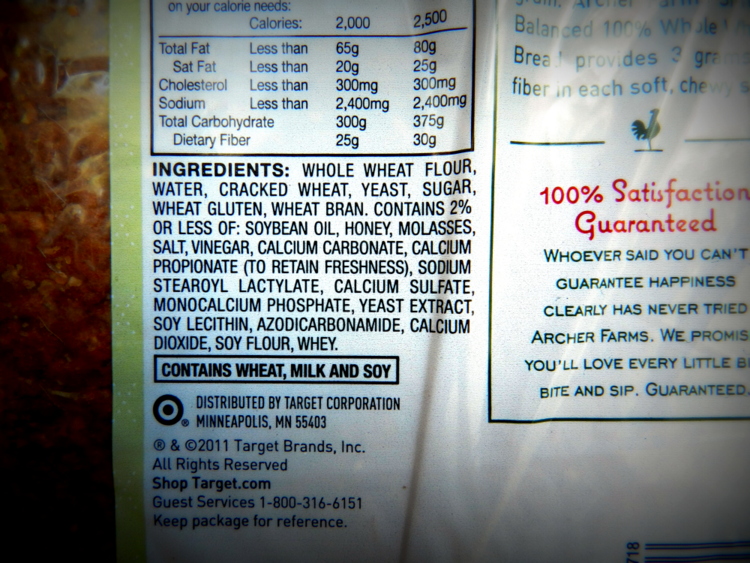
Now onto which bread you should buy. Stick with those labeled "100% whole wheat bread", as seen in the picture above. The first ingredient of 100% whole wheat bread will be "whole wheat flour". Check it out!

 
Thankfully, most major brands carry this option and you'll probably want to try a few different brands to see which one you like the best. I got mine this week from Target and really like the texture and quality. I can honestly say though that I've had to shop around because they all taste a little different to me. See what works for you.

Other whole grain options to include in your diet throughout the day are brown or wild rice, oatmeal, whole grain crackers, whole wheat pasta and popcorn. 


Thanks for your question Cameron!

Apr 3, 2012

Coconut Oil: Miracle Food or Food Fad?

One thing's for sure in the food world: coconut oil is in. Maybe coconut oil is the new kale? Or kale is the new coconut oil? I don't know. 

Seems like coconut oil has generated a lot of hype lately, but are the health claims based on science or is it just another food fad? 


Question:

Recently, a reader sent me the question: "Could you do a post about coconut oil? I've heard conflicting opinions about whether it is a healthier alternative or not... What have you seen about it?" -- Lauren

Answer:
 
This is a great question, in large part because it's so relevant right now. I can't even count the number of health claims I've seen and heard associated with coconut oil; from things like malnutrition and liver disease to baldness and stomach pain. Quite a spectrum, huh?
 These types of claims can be found from a simple google search as well as "health/nutrition" books, but are they true? Meaning, is there ample scientific evidence to support these claims? 

According to current reputable health sources, no. Many of the health claims are simply not well-substantiated by research. Here's what we know to be true about coconut oil: it has no cholesterol but is high in saturated fat, which should be limited in our diets. Instead of cooking with coconut oil (or eating it by the spoonful, which I no joke have witnessed), I recommend using heart-healthy oils low in saturated fat like canola oil, olive oil, safflower oil, sunflower oil, etc. 

Here are some helpful, credible references on coconut oil that summarize the consensus of current research:


Whenever you're wondering about the latest miracle food or supplement, I encourage you to look towards these types of reputable organizations for information in addition to your doctor or registered dietitian (RD). 

Thanks for your great question, Lauren!

Mar 23, 2012

Q & A with the Dietitian: Puzzled By Whole Grains

Sometimes food labels can be confusing. Lately, whole grains are making a comeback as more people are realizing their health benefits. However, between "whole grain", "whole wheat", "100% whole wheat", "enriched wheat", etc, labeling for grain products sometimes make it difficult to discern the healthiest choice.

Q. Jen wrote:

Several years ago, I switched my family over to whole wheat pasta for the clear nutritional benefits. This has generally been fine, except that I've found the whole wheat pasta sometimes doesn't work well in casseroles and overwhelms the flavor of very light sauces. I recently noticed a new pasta product at Trader Joe's called High Fiber Penne. The nutritional information on the back of the package is surprisingly similar. The penne cooks and tastes more like a traditional durum semolina pasta noodle. I'm wondering if the High Fiber Penne noodles would be a reasonable addition to our pasta collection or if this is marketing hype that is leading us away from a solid nutritional food choice.

Sincerely,

Jen

A. Dear Jen,

It's fantastic that you've made the commitment to cooking with whole grains. Currently, there are a growing number of choices when it comes to pasta. And just when you think you've got it figured out, a new product comes out and throws you for a loop. 

The answer to your question lies in understanding what whole grains naturally provide. While the good-for-you ingredient list is long, I'll focus on some specifics. Whole grains provide B vitamins, zinc, copper, iron, and vitamins A and E. These vitamins and minerals help support a healthy immune system. Additionally, whole grains are an excellent source of carbohydrates, provide fiber and are low in fat. All the healthy ingredients found in whole grains work towards maintaining a healthy body and may help lower cholesterol, promote a healthy GI tract and prevent certain types of cancer. The current recommendation from the USDA is to make half of your grains whole grain. 

Whole grains include products such as "100% whole grain" bread, brown rice, whole wheat pasta, popcorn, oatmeal, quinoa, millet, and amaranth.

Can you guess which products below are whole grain?


The cornmeal and the rice are not. And yes, we eat them occasionally at my house.

To answer your question specifically, the high fiber penne is essentially white pasta with added fiber, vitamins and minerals. The first ingredient on this product is "enriched durum wheat seminola". Translation: enriched white pasta. The remaining ingredients are added fiber and B vitamins. But remember all the other healthy ingredients I mentioned above found naturally in whole grain products? They're not all found in the high fiber penne. Also, nutritionally it's often easier for our bodies to absorb nutrients found naturally in food products than those that are added or "enriched". For these reasons, I would recommend using the whole wheat pasta most frequently and using the high fiber penne occasionally (like you said, when it works better with the recipe you're using).

Thanks for your question Jen and I hope this helps!

Mar 11, 2012

Brussels Sprouts Recipes

This week was a long one. Between house hunting, work and parenting, the hubs and I feel a little worn. That's okay though. It's all part of life, right? I'm a firm believer that going through difficult times can make you a better person. Sure, I need frequent reminding, but I know there's a light at the end of the tunnel. 

Sometimes we have to look at the big picture when it comes to food too. For example, I'm sure you could name a few veggies you'd rather not associate with. Maybe your mom made them one too many times as a child. Or maybe you're not quite sure how to prepare them in a way that would make them more appealing. 


This week a friend asked me for brussels sprouts recipes so that her, her husband and her kids would enjoy them more. I don't know about you but brussels sprouts are one vegetable that - at least growing up - I could not stomach. No chance, no way. They were in my mind the equivalent to dirt. Now I know how nutritious they are and that they're actually quite tasty when prepared well. 

Here are a few brussels sprouts recipes my family really enjoys:


Brussels Srouts with Bacon (I use turkey bacon or a little pancetta)


In general, I like roasting veggies because it gives flavor without additional salt or fat. I also like to season with a variety of things like salt, pepper, parmesan cheese, sauteed shallots or garlic, chicken broth, and a little pancetta or turkey bacon (usually not all at once, but that depends on the kind of day I'm having).

In terms of children eating their vegetables, I'll give you the scoop on what really happens at my house. Even a dietitians child doesn't always eat his vegetables. Case in point: 

Plate before serving:


Plate after serving:


My philosophy in getting children to eat their veggies (I know, I've said this before) is to provide vegetables consistently with meals and snacks, offer a variety of choices and provide gentle encouragement. If they refuse - and they will refuse at least sometimes - encourage them to eat veggies, allow them to see you eating your veggies and do this consistently throughout their childhood.

Will is generally a pretty good vegetable eater, so I feel okay if he has a few meals here and there where the veggies aren't eaten fully. That's life.

Do you have any good brussels sprouts recipes or tips on how you get your kids to eat their veggies?

Feb 7, 2012

Q & A with the Dietitian: Healthy Diet for Lowering Triglycerides

I am thankful.

Thankful that my son no longer has attachment anxiety - took about 12 months but it's FINALLY over. Thankful for rainy days like today. And thankful for wonderful friends who ask great questions.

This week, the topic is lowering your triglycerides. High triglycerides are a risk factor for heart disease, stroke and other health problems, making it super important to take steps when your younger to prevent the condition. The only way you can know your triglyceride level is through lab tests, so it's beneficial for adults to get them checked annually.

No surprises, the basics of prevention include a healthy diet of fruits, vegetables, whole grain, lean meats and low-fat dairy.


Question:

Anonymous writes: "My uncle needs something to be done. He's too heavy with a fused spine and his triglyceride levels are like 400 when it needs to be half and all docs wanna do is up dosage of meds so I recommended a protein supplement to him cause my buddy has had great results (400 down to 270) while using it. What do you think?"

Answer:

Thanks for your question!

There are so many supplement lines, it's hard to keep track. Supplements are not regulated by any governing body (like the FDA), so it's hard to know for sure if their health claims are true and even whether the ingredients listed are actually in the product.

In general, I recommend "food first". Rarely is there a need for a supplement unless someone has a specific medical condition and it is recommended by a doctor or dietitian. I've found that most people use to supplements to help gain muscle or lose fat, but both can be done just as easily (and much cheaper!) through healthy foods and regular exercise. That's my professional and personal experience :)

While I don't know much about your uncle or other potential medical conditions he has, I would recommend the basics of lowering your triglycerides -- lose weight if needed by eating fewer calories, increase fiber intake through whole grains, fruits and veggies and eat a low-fat diet (especially limiting saturated fats and avoiding trans fats), and regular exercise. Ceasing smoking and limiting alcohol intake also helps.

I've seen this work for people I've counseled and I'm confident it will help your uncle as well. 

Jan 31, 2012

Q & A with the Dietitian: Carbs and Sugar

First off, thank you all so much for your questions! They're wonderful are a great way for us to talk and share health information. If you have any insight or questions about the topics, don't be shy, share the knowledge and post a comment. I love hearing from you.

This weeks question is about the role carbohydrates and sugar have on blood sugar and why it matters for our health.

Carbs, sugar, carbs: 
what's the difference and why do I care??


Question:

Morgan wrote: "I've been really strictly monitoring my sugar every since I started my low carb diet on the 1st and I am wondering what effects my blood sugar more - carbs or sugar? I like these carb conscious protein bars. They have 18 g carbs, but 5 grams of sugar and I ate one last night because my sugar dropped to 77 and it didn't seem to help much. SO, should I be focusing more on the sugar or carb content on nutrition labels? Thanks."

Answer

This is a great question, especially for those who are diabetic or are interested in monitoring their  carbohydrate intake. The answer is quite complicated, so I'm just going to focus on basic information. In order to answer your question, it's important to understand the difference between various types of carbohydrates. Here's a very simplistic breakdown:

Three main types of carbohydrates:
  1. Complex carbs: i.e. starchy vegetables, beans, grains
  2. Sugar: i.e. milk, fruit, fruit juices, candy, sweets
  3. Fiber: found in foods like fruit, whole grains and beans
As far as blood sugar is concerned, "complex carbs" increase blood sugar more slowly than "sugar". Complex carbs generally contain the most nutrients, vitamins and minerals and therefore should comprise the largest part of our total carbohydrate intake. Sugar (or refined sugar) is a quick-acting carb that will increase your blood sugar much faster than other types of carbs.

As far as nutrition labels go, in general it's better to eat foods that contain less "sugar". However, if you're having an episode of low blood sugar and you have a medical condition like diabetes, eating foods higher in "sugar" will increase your blood sugar more quickly.

So let's talk about your blood sugar and the protein bar you ate. First, a blood sugar of 77 mg/dL is good. Since your blood sugar technically wasn't "low", you don't have to worry about raising it. However, if you wanted to raise it slightly, you may need a larger dose of carbohydrate than the protein bar provided. Secondly, protein bars have a lot of.....protein, and that nutrient does not increase blood sugar.

The exact amount of carbohydrate you should eat to maintain a healthy blood sugar throughout the day depends on the diabetes medication you take (if you're diabetic) and how many carbs you're eating at meals and snacks. For people without diabetes, eating a healthy, well-balanced diet regularly throughout the day - and not over-eating - is adequate to maintain a healthy blood sugar range.

People with diabetes should talk to their doctors or a certified diabetes educator to layout how many carbohydrates should be eaten for meals and snacks and (if necessary) how much insulin or oral glucose medication is needed to keep blood sugar within a healthy range of 70-120 mg/dL. Lastly (and certainly not least), low-carb diets are not a good idea for people with diabetes - or anyone for that matter - because they can cause blood sugar irregularities, among many other health problems. That's a WHOLE other post!

Thanks for your question and don't by shy if you have any more :) 

Jan 23, 2012

Q & A with the Dietitian

I'm pretty sure 99% of the United States currently has football on the brain. But I confess, I'm apart of the 1% that doesn't. I'm sorry. I'm just not that into it. Food on the other hand, I'm totally into! This week for Q & A, we're talking "healthy juices". Are they really healthy? Is the "vegetable serving" some claim to have legit?


Last week, Cameron wrote:
"I have a question for you Tiffany. My three year old son is not a big fan of veggies. I have been buying the V8 fusion drinks because they have a full serving of fruit and vegetables. Is this a good alternative if your child is resistant to eating vegetables? Are those fruit drinks as good as they're advertised??"

Thanks for your question Cameron! This is a great topic because I know many parents struggle with getting their kids to eat veggies. And so many parents wonder whether fruit and vegetable juices (like the V8 fusion you mentioned) actually provide good nutrition comparable to whole fruits and veggies. As a mom myself, I've looked into these questions and here's what I've found.... 

The answer is a bit more complicated than yes or no. First, you have to consider the juice quality. Any juice that provides a legitimate serving of fruit and/or vegetables should be labeled "100% juice". If not, don't buy it. The juice in the image above is only 50% juice. So this, unfortunately is not the best option. However, there are a variety of 100% fruit juices available. The only 100% vegetable juice I know off hand is tomato.

Secondly, the amount of juice toddlers drink throughout the day should be limited to 4 oz. Why? Because it is a very concentrated source of sugar, calories and lacks fiber. This includes fruit juices and fruit/vegetable combo juices. According to the V8 fusion website, "*Each 8-ounce glass of V8 V-Fusion juice provides a 1/2 cup of vegetables and 1/2 cup of fruit." Therefore, 4 oz of juice would equal a 1/4 serving of vegetables and a 1/4 serving of fruit. Not really that much, considering we're aiming for 1 cup of fruit and 1 cup of veggies per day for our toddlers.
 
So, my recommendation is to 1.) limit juices to 4 oz per day of 100% varieties only, 2) continue to encourage your little one to eat whole fruits and veggies from other sources (like fresh, frozen, canned or dried). But HOW, you ask? I have a toddler at home and definitely had to put in some "work" to get him to eat fruits and veggies. Thankfully, he eats them pretty well and I credit some simple tactics I practiced everyday since he started solids at 6 months.

Tips on getting kids to eat fruits and veggies
  1. Expose your child to a variety of fruits and vegetables by offering different kids regularly.
  2. Offer your child a fruit and/or a veggie at meals and snacks, in addition to other healthy foods. If after you encourage them to eat their fruit and veggie, they refuse, allow them to but always continue to offer at each meal and snack.
  3. Be patient and avoid forcing or bribing. This can set up an unhealthy relationship with food, and usually has the opposite result!
  4. Lead by example and let them see you eating (and enjoying) fruits and veggies.
  5. Here are some other great toddler eating tips from the American Dietetic Association
Thanks again for your question, Cameron! Hope this helps :)

Jan 16, 2012

Q & A with the Dietitian

Hello friends! Hope you had a great holiday weekend and were able to get some R & R. This week on Q & A we're talking about a topic I know most pregnant moms wonder about......healthy weight gain.

 
Question

Mollie wrote:

About how many calories should I be eating while pregnant and exercising? I know that the kind of food I eat is important as well, but some days it's just easier to keep track of calories (though some other simple guidelines would be great). I'm still exercising every day and ALWAYS feel hungry, but I don't want to gain more than the recommended amount.

Answer

Hi Mollie! Thanks for your question and congratulations! The amount of calories you need for pregnancy and exercise depends on your baseline calorie needs, which will change with each trimester. For a healthy woman of normal weight (BMI 18.5-24.9), aim to gain a total of 25 to 35 pounds throughout the entire pregnancy. This can be spaced as follows:

       First trimester: 2-4lbs
       Second and third trimester: About 4 pounds per month

It's important to gain weight especially during the second and third trimester as this is the time the baby needs the most calories for growth. Eating a healthy diet will ensure adequate nutrient intake and optimal growth for the baby. That said, if you're hungry all the time (and trust me...I hear you!), it may be helpful to modestly keep track of what you eat. I say modestly because pregnancy is obviously not the time to worry about gaining weight and stressing about how many calories you're eating. It's also important to listen to your body so if you have real hunger, eat! Regardless, for the average woman here is an estimate of how many calories to consume per trimester (without exercise):

Sample daily calorie needs during pregnancy:

       First trimester: ~1,800 calories
       Second trimester: ~2,100 calories
       Third trimester: ~2,400 calories

Now on to exercise....

The amount of calories you'll need in addition to the above mentioned estimates will depend on the type of exercise, the intensity and your body weight. Since it is recommended to either continue your normal pre-pregnancy exercise plan (or scale it back a little, especially as trimesters progress), you probably have a good idea of what you normally burn during your workout. Use that number and add to your calorie intake for the day.

So, for example if you run 3 miles one day during your first trimester, you may burn around 300-400 calories. Add that number to 1,800 calories and you'll need about 2,100 -2,200 calories for the day.

Click here for an example of a healthy pregnancy diet that I wrote for livestrong.com.

As a side, my answers for you today are straight from the textbook. Having experienced pregnancy myself, I can say that every woman is unique and does not always fit the textbook mold. Calorie needs may vary and weight gain may vary. The most important things are to listen to your body, gain enough weight by eating a healthy diet, continue exercising and don't stress. 

I hope this answers your question Mollie and feel free to ask more if you have any further questions. Also, for the rest of my readers, feel free to send me your own nutrition questions at tiffanythedietitian@gmail.com.

Jan 10, 2012

Q & A with the Dietitian

It's question & answer time!

Do you have a nutrition question you want answered? Wondering whether a certain food is actually healthy? Need tips on making affordable healthy meals? Hitting a weight loss plateau and need advice? Or maybe you want to know more about getting your kids to eat nutritious foods? You ask it, I'll answer it. Send me your questions at tiffanythedietitian@gmail.com.

First question.....


QUESTION:

Hi Tiffany! Do you know what the final word is on a high dairy diet and weight loss? I know it's bounced around from dairy bad to dairy good. I was just curious because my weight loss has really slowed down even though I haven't changed my exercising and I've continued to slightly decrease my calories the smaller I get. (it's 1450 right now) so I'm looking a tweaking something, anything to help with my last 30 pounds. Thanks!!

--Andree

ANSWER: 

Hi Andree!

According to Registered Dietitians, as long as you don't have a dairy allergy, dairy products have always been considered healthy to include in your diet. Why? It offers calcium, vitamin D, protein, and carbohydrates to help keep you strong and energized. 

The dairy industry advertise that milk products can help you lose weight. This is only true as long as your total calorie intake is below your calorie needs. So, the weight loss comes from a calorie deficit rather than simply consuming dairy products. Aim to consume 3 servings of low fat dairy products per day as part of a healthy diet.

Now on to weight loss. Although it was not stated in her question, I'll give a little background : Andree is very active and exercises intensely at least 5 days per week, which in turn increases her calorie needs. After a few calculations based on height, weight and activity level, Andree should be eating at least 1600-1800 calories per day for weight loss. As odd as it may sound, it's important to eat enough calories when trying to lose weight to prevent your metabolism from slowing down. When we under-eat, a message is sent to our brains to slow our metabolisms to prevent starvation. To avoid this, it's important to eat adequately and only slightly less than your normal calorie intake.

The best way to determine your metabolic (i.e. calorie) needs is to consult a dietitian. A less precise, but still effective way is to figure out how many calories your body burns to maintain your current weight. Do this by recording what you eat for 2-3 days and adding your total calorie intake per day. Then, reduce that number by 250-500 calories per day and healthy, gradual weight loss will result.